Council on Energy, Environment and Water Integrated | International | Independent

The Council’s research on improving air quality focuses on achieving India’s ambient air quality standards, tackling crop-burning in Punjab through promoting conservation agriculture for stubble management, developing low-cost sensors for monitoring and regulation, and communicating health risks of air pollution to citizens. In 2015, during phase one of the Delhi government’s odd-even experiment, The Council conducted an independent evaluation by measuring air quality and traffic volumes at five key locations across New Delhi. Air pollution, the biggest environmental health risk, is responsible for more than half a million deaths annually in India.
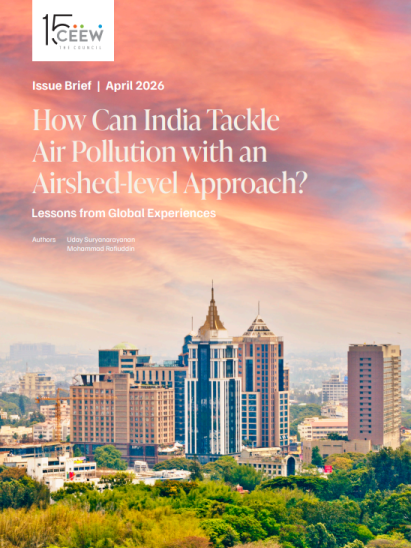
How Can India Tackle Air Pollution with an Airshed-level Approach?Lessons From Global Experiences
Roadmap of the methodology to assess the climate co-benefits of the SUP ban in Tamil Nadu
Roadmap of the methodology to assess the climate co-benefits of the SUP ban in Maharashtra